
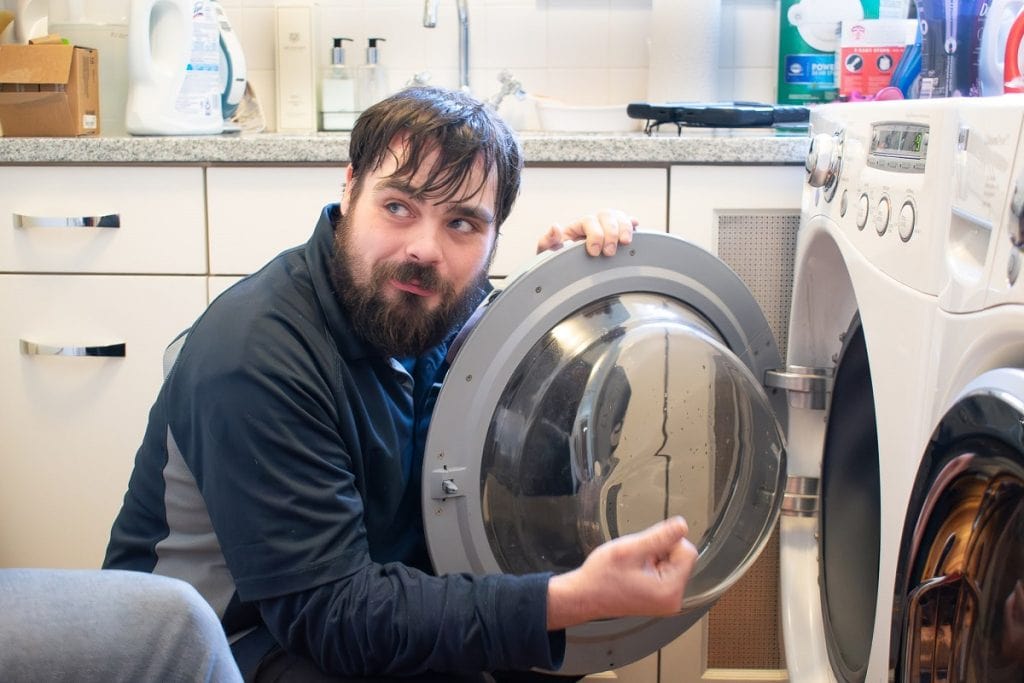
Finding a puddle around your washing machine is far from ideal, especially when you’re rushing to get the laundry done. But don’t fret! More often than not, this common household inconvenience has a DIY solution. Let’s embark on this journey together to understand and address those leaky washing machine woes.
Navigating the Waters of the Leaky Washing Machine
Leaky machines can feel like mysteries. However, by diving into each potential cause, we can decode the issue and ensure it doesn’t recur.
Laundry Detergent Issues
Believe it or not, sometimes the culprit is simply our trusty detergent. Particularly if you have a washing machine leaking from underneath, excessive suds might be overflowing and causing a mess.
If your floor is suspiciously slippery, this is a hint you might be using more detergent than required. Remember, high-efficiency machines demand high-efficiency detergents, so always double-check labels. Running an empty cycle can clear out any residual suds, and for future washes, diligently measure out the detergent or even consider switching to convenient pods.
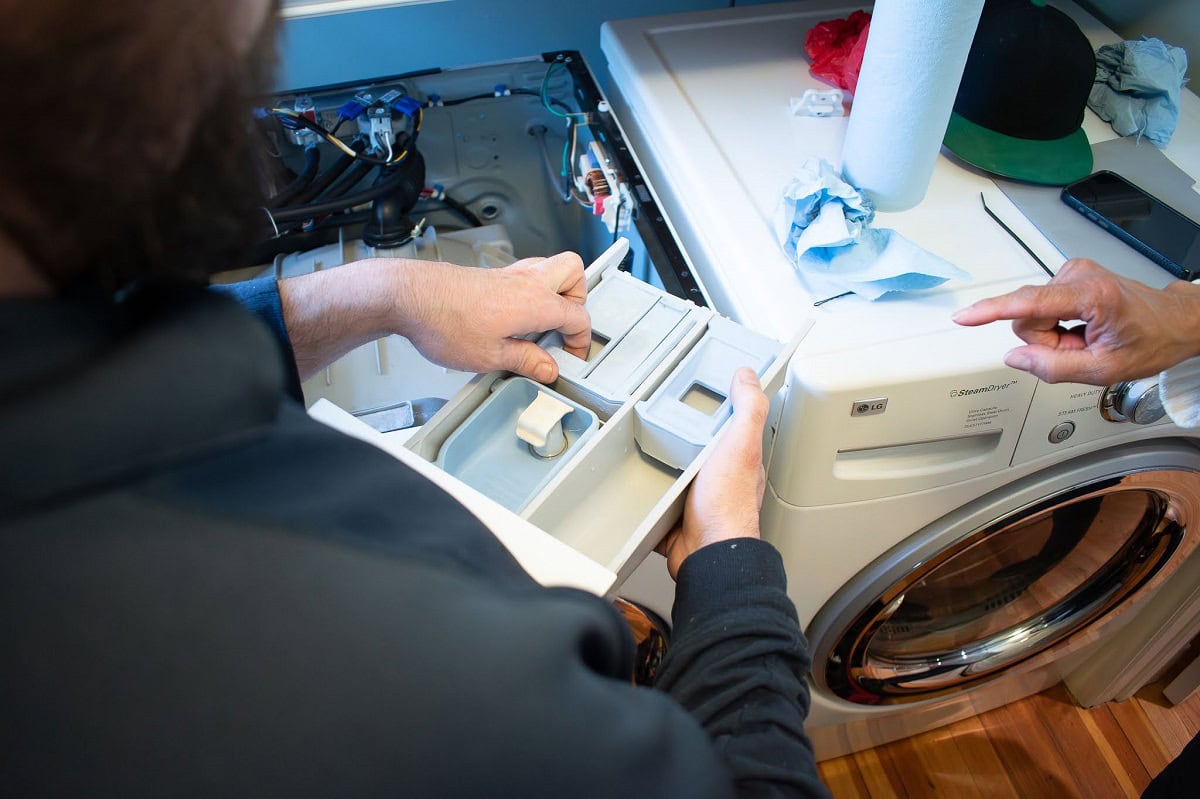
The detergent drawer can also begin to leak if it’s not cleaned and maintained properly. Make sure to address any detergent residue buildup or mildew inside the detergent dispenser to avoid leaks and other issues.
Machine Is Not Level
A washer that’s off-kilter isn’t just noisy; it can also lead to sneaky leaks. An uneven washing machine can particularly result in water escaping during those intense spin cycles.
A quick push can reveal if your machine is stable. If it rocks, it’s time to adjust the legs. Grab a leveling tool, and fine-tune those legs to ensure your machine stands tall and balanced. A periodic check, especially if the machine is moved, will keep you ahead of future leaks.
Washer Door Is Leaking
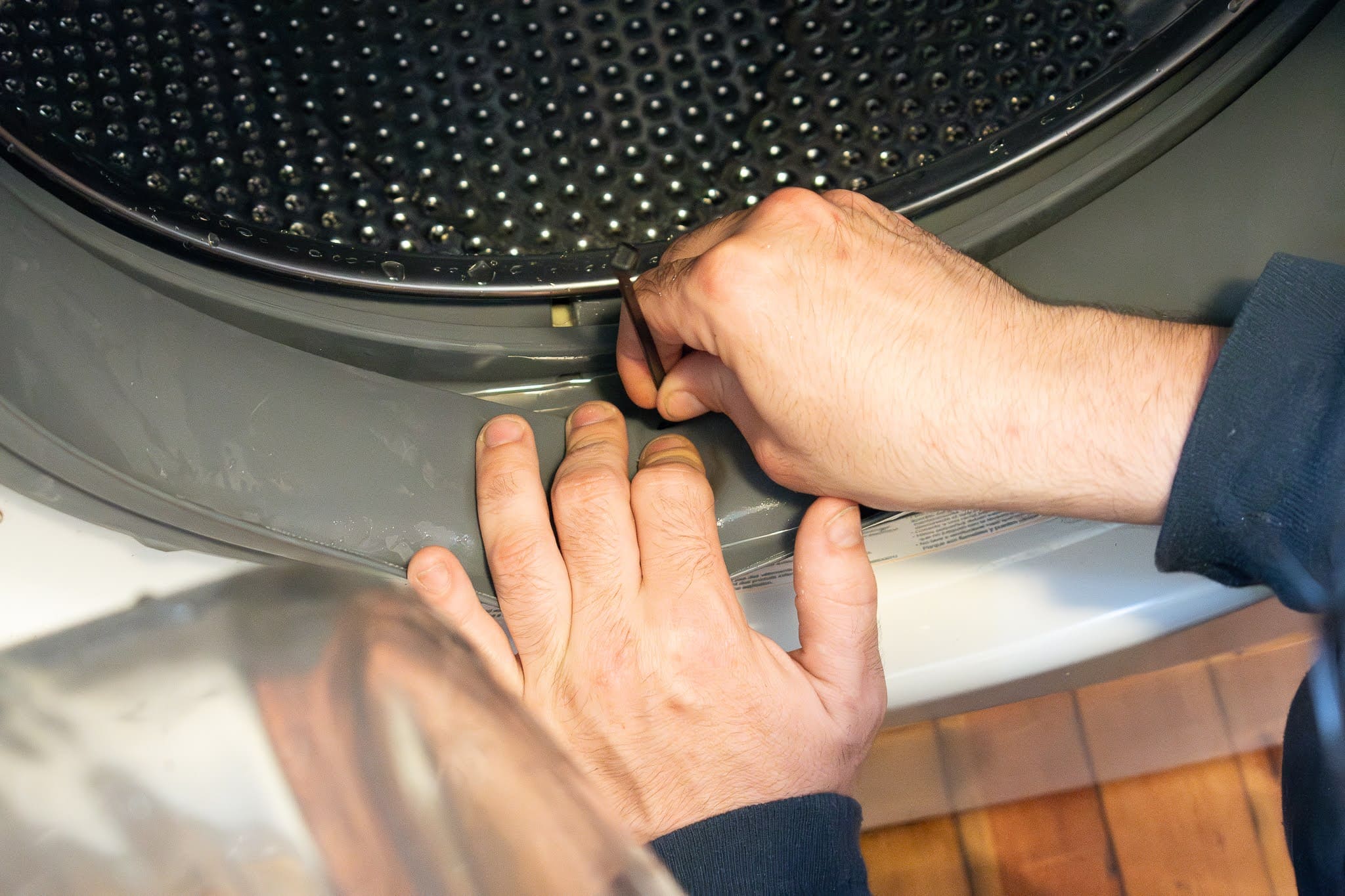
That rubbery ring on your machine’s door isn’t just for aesthetics. It keeps water in, and when it’s compromised, you might find water making an escape, especially if you’re noticing a washing machine leaking at the front.
Inspect the seal for any noticeable debris, lint, or hair. Cleaning your washer door seal with a water-vinegar mixture can make a huge difference. However, if the seal is visibly damaged or torn, consider replacing it.
Washer Hose Leaks Water
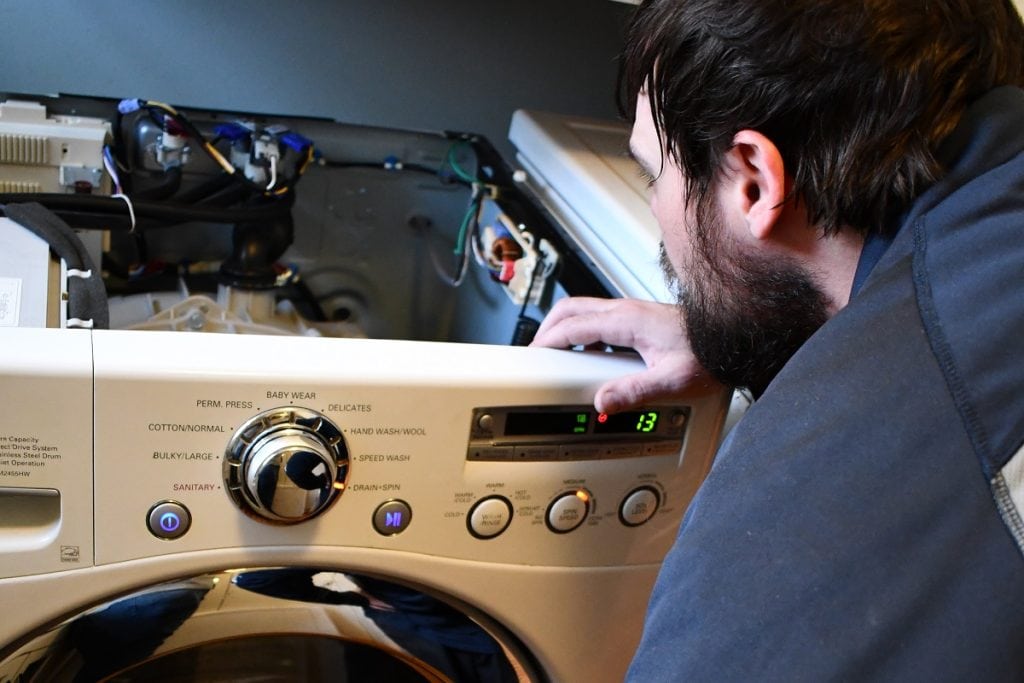
The connections and hoses behind your machine can erode or loosen over time, becoming a prime spot for leaks. While the machine is filling, take a moment to inspect the back. If you notice any slow drips or feel moisture, you might be onto something.
Ensure hoses are snug and properly connected. If they seem damaged, it’s time for a replacement. A regular check every few months can save you from unexpected puddles.
Inlet Water Valve Is Damaged
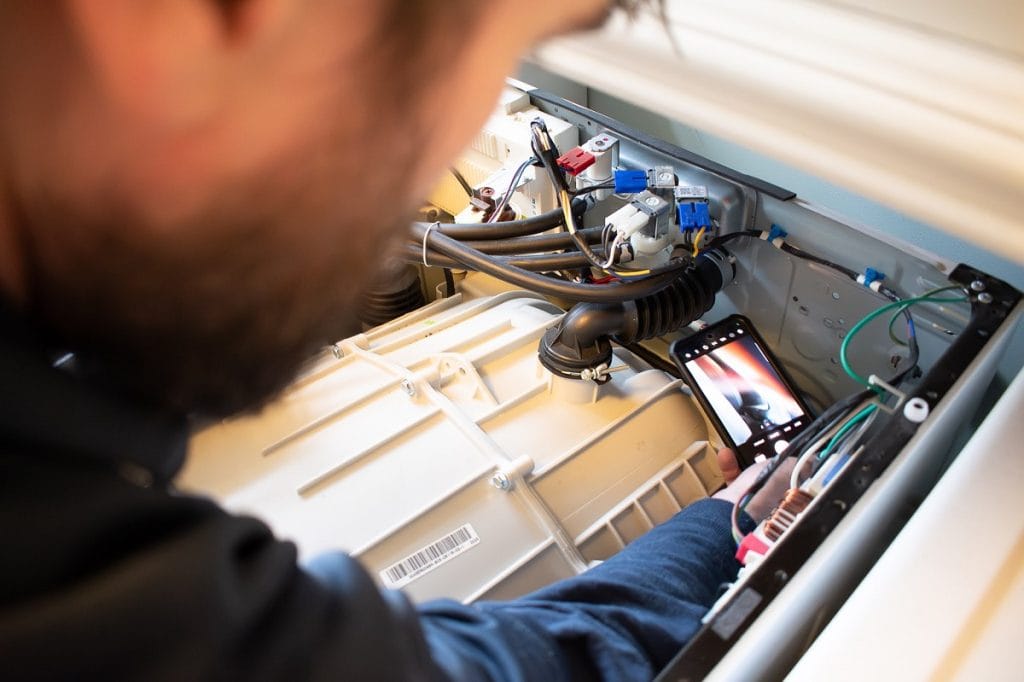
The unsung hero, the inlet water valve, often goes unnoticed. It’s responsible for the water flow into your machine, and when it’s not performing at its best, leaks can ensue.
If you spot drips when your machine is filling, it’s a sign. Replacing this can be a tad tricky. When in doubt, it’s always good to consider professional assistance like A Action Appliance Repair.
Machine Is Not Draining Properly
Water standing stubbornly at the bottom post-cycle? Your machine’s drain might be throwing a tantrum. Check the drain filter for any obstructions and give it a good clean if you find your washer won’t drain properly.
For those who often find forgotten coins or keys post-laundry, a routine pocket-check before tossing clothes into the machine can be a lifesaver.
With the right approach, a leaky washing machine is just a temporary hiccup. But remember, if DIY feels overwhelming or if the issue persists, the washing machine repair experts at A Action Appliance Repair are a call away!