
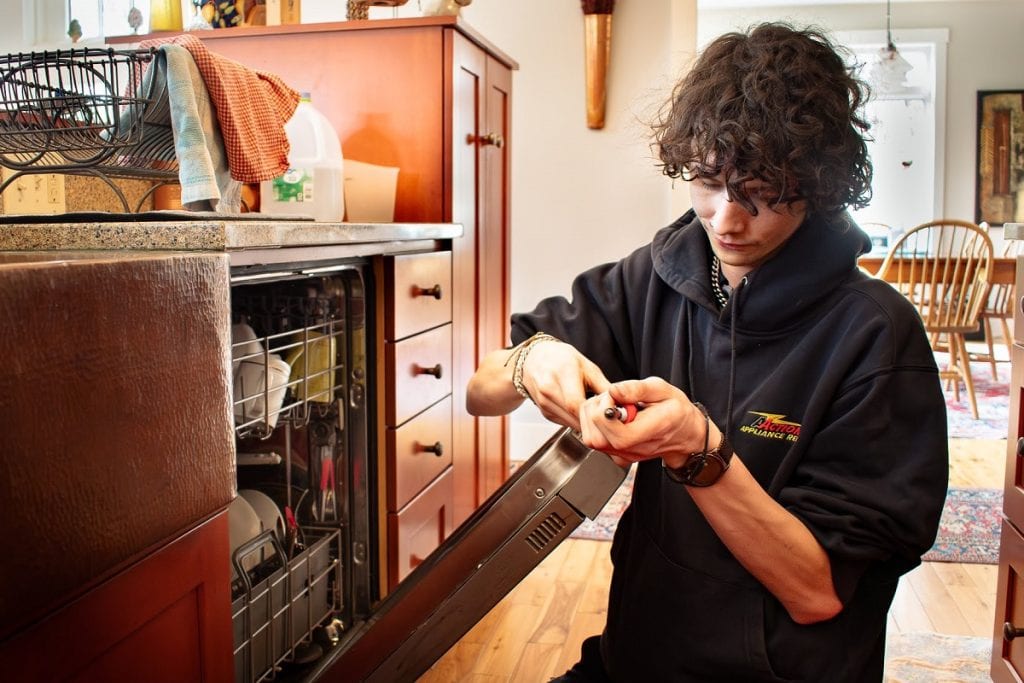
Finding water around your dishwasher can quickly turn an ordinary cleanup into a bigger concern. If your dishwasher leaking problem has appeared suddenly, the source could be as straightforward as excess detergent or as complex as a failing internal component. Paying attention to when and where the water appears can provide useful clues about what may be happening.
A small amount of water should not be ignored. Repeated leaks can potentially affect nearby flooring and cabinetry, and the underlying dishwasher problem may worsen over time.
Regular dishwasher cleaning and maintenance can help reduce buildup and keep the appliance performing properly. However, when water continues to escape despite routine care, professional diagnosis may be necessary.
Dishwasher Leaking Water? These 6 Culprits Could Explain the Problem
There are several reasons a dishwasher leaking issue can develop. Some involve routine maintenance or how the appliance is used, while others involve components that should be inspected and serviced by a trained technician.
The timing of the leak can also be important. A dishwasher dripping near the door may point to a different concern than a dishwasher leaking from the bottom during a wash or drain cycle. Here are six common possibilities to consider.
1. A Dirty or Clogged Dishwasher Filter
The dishwasher filter helps capture food particles and debris so they do not continue circulating throughout the appliance. Over time, accumulated debris can interfere with normal dishwasher performance.
Depending on the model, a dirty filter can contribute to drainage problems or water remaining where it should not. If your manufacturer recommends routine filter cleaning, follow the instructions in the owner’s manual. Cleaning an accessible, removable filter as directed by the manufacturer is a useful maintenance measure that does not require accessing internal appliance components.
Pay attention to other symptoms, too. If the dishwasher won’t drain water in addition to leaking, the combination of symptoms can help a technician narrow down the potential cause.
If cleaning the filter according to manufacturer recommendations does not improve performance, professional service is the safer next step.
2. Too Much or the Wrong Type of Detergent
Detergent is necessary for cleaning dishes, but using more does not necessarily produce better results. Too much detergent or a product that is not appropriate for the appliance can create excessive suds that interfere with normal operation.
Signs detergent could be contributing to the problem include:
- An unusual amount of foam inside the dishwasher
- Suds appearing around the door
- Water escaping during the wash cycle
- Residue remaining on dishes or inside the tub
If you notice these symptoms, check the detergent packaging and your dishwasher owner’s manual to confirm you are using the recommended type and amount.
Cleaning performance can provide another useful clue. When a dishwasher isn’t getting dishes clean, detergent use may be one factor worth considering, although poor cleaning can have several other causes.
When should you call a professional? If proper detergent use does not resolve the issue and you continue seeing a dishwasher leaking water, have the appliance professionally evaluated. Persistent water leakage may indicate a problem unrelated to detergent.
3. Improperly Loaded Dishes
How you load a dishwasher can influence more than how clean the dishes become. Large dishes, cookware, and other items can sometimes interfere with the intended spray pattern inside the tub.
When water is repeatedly redirected toward the door or another vulnerable area, you may notice dishwasher leaks during certain portions of the wash cycle. Poor loading can also prevent spray arms from distributing water as intended, contributing to disappointing cleaning results.
Review the loading recommendations in your owner’s manual, particularly when washing oversized items. Make sure dishes are positioned according to the manufacturer’s guidance and are not interfering with normal operation.
If the dishwasher continues leaking when it is properly loaded, another component may be responsible.
4. A Worn or Damaged Door Gasket
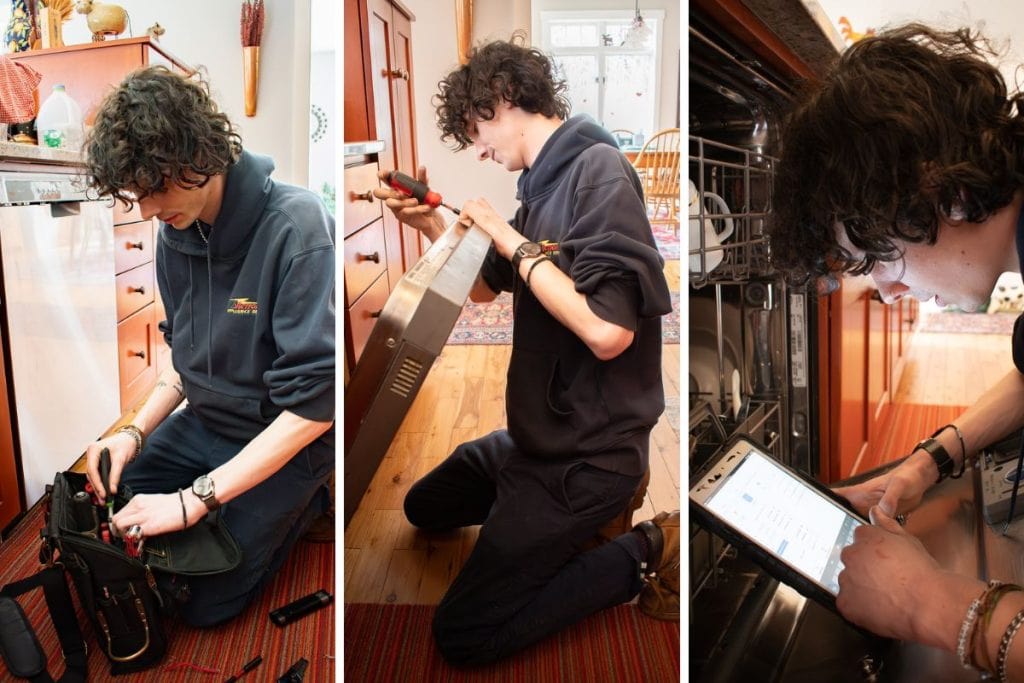
The gasket around the dishwasher door creates a seal designed to keep wash water inside the tub. Age and repeated use can eventually cause this flexible material to deteriorate, potentially allowing water to escape around the door.
What can you safely look for? Without removing any components, visually check the accessible gasket for:
- Visible cracks
- Torn or deteriorated areas
- Sections that appear deformed
- Other obvious signs of damage
A compromised seal may result in a dishwasher dripping around the door, particularly while water is circulating during a wash cycle.
One important detail: The place where you see water is not necessarily where the leak began. Water can travel along the appliance or surrounding surfaces before reaching the floor. If the gasket looks normal but water continues appearing near the door, another component could be responsible.
Keep your inspection visual and surface-level. If you notice gasket damage or cannot determine why water is escaping, a professional technician can identify the actual source.
5. A Problem With the Water Inlet Valve
The water inlet valve regulates the flow of water entering the dishwasher. If this component develops a mechanical or electrical problem, it may no longer manage incoming water correctly.
A malfunction involving the valve can contribute to abnormal filling or leaking. Unlike detergent or loading concerns, however, an inlet valve problem is not something homeowners should attempt to diagnose by accessing internal components.
Do not move the dishwasher, open panels, or attempt electrical testing to investigate the valve. A qualified appliance technician can safely determine whether the inlet valve or another part of the fill system is responsible.
If you notice a dishwasher leaking from the bottom and cannot identify an obvious surface-level cause, stop using the appliance and arrange professional service. Continuing to run an appliance that is actively leaking may allow additional water to escape.
6. A Drain Pump or Hose Issue
The drain system removes used water from the dishwasher at the appropriate point in the cycle. A problem involving the drain pump or connected components can interfere with that process and potentially contribute to leaking.
Pay attention to when the water appears. The timing can give a professional technician useful information about the potential source:
- During washing: The leak may originate from another part of the water circulation system.
- During draining: A drain-system component may need professional evaluation.
- After the cycle: Remaining water and other drainage symptoms may provide additional clues.
If leaking occurs alongside poor drainage, the combination of symptoms is especially important to mention when scheduling service.
What should you do next? Avoid accessing or disassembling the drain pump or internal hoses. The drain pump is an internal assembly and should be professionally diagnosed. Accessing these components may also require moving the dishwasher or opening areas of the appliance that should be left to a trained technician.
A professional can determine whether a drain component has failed and whether replacement is necessary.
When to Seek Professional Service
A leaking dishwasher can have many possible causes, ranging from detergent and loading concerns to deteriorated seals and failed internal components. Paying attention to when the leak occurs, where water becomes visible, and whether other performance problems are happening can provide valuable information for diagnosis.
Safe maintenance, such as following manufacturer recommendations for filter care and proper loading, can help prevent some dishwasher problems. Persistent leaks, leaks coming from underneath the appliance, and problems involving internal mechanical or electrical components should be handled by a qualified professional.
If you need a dishwasher repair service in Manchester, contact A Action Appliance Repair. Our professional technicians can identify the source of the leak and recommend the appropriate repair to help protect your dishwasher and the surrounding area.